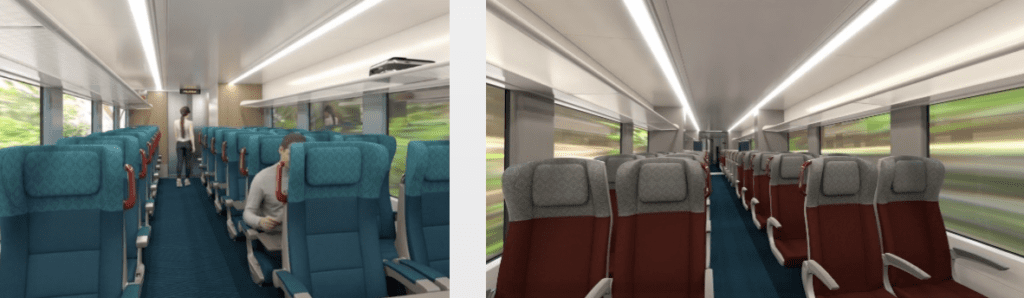
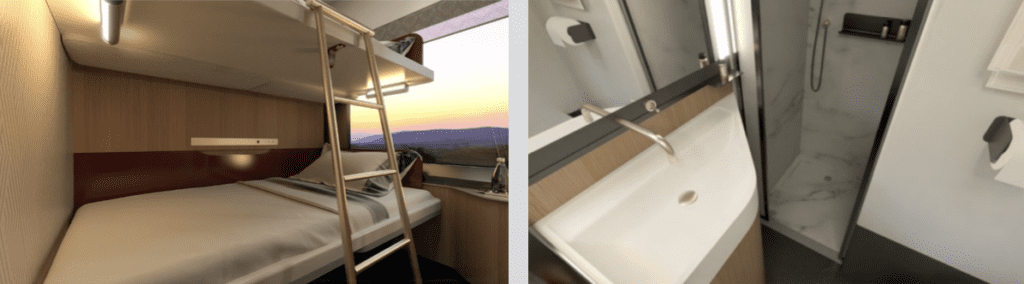

It is a new rail transport service that interconnects the main cities and tourist areas of the Yucatán Peninsula.
This project will strengthen the territorial organization of the region and enhance its tourism industry. It will generate economic benefits and increase connectivity in the Yucatán Peninsula, allowing cargo and passengers to be moved in a more efficient and less polluting way.
It will travel through the Mayan world in five states of southeastern Mexico with approximately 1,554 km of railways that will interconnect the states of Tabasco, Campeche, Chiapas, Yucatán, and Quintana Roo.
The Tren Maya will run on low-sulfur biodiesel only in the first two sections, and all the others will be powered by electricity.
It will provide cargo and passenger service. The maximum speed it will reach will be 160 km/h for passengers and 120 km/h for cargo.
The passenger trains will consist of 5 to 7 cars that will be equipped with modern information media, including: video screens, on-board internet, cafeteria service for long-distance services, restrooms, air conditioning, panoramic windows, comfortable seats, and easy accessibility, where the transport capacity may be 300 to 500 seats per train.
It will have 42 trains and 219 modern cars.
The Tren Maya will have 3 types of trains:
- Xiinbal (walking): standard regular service train that will allow you to enjoy a trip with large panoramic windows. 31 trains and 166 cars.
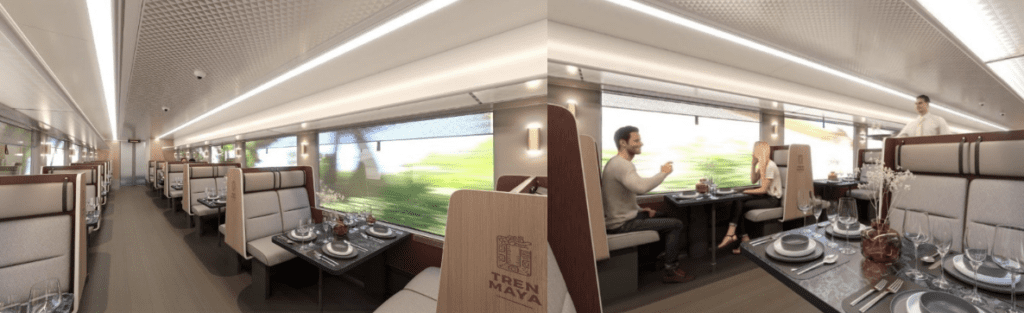
- Janal (eating): restaurant, with a design inspired by the work of engineer and architect Luis Barragán, has comfortable spaces designed to enjoy regional cuisine. 8 trains and 32 cars.
- P’atal (staying): train for long distances, with comfortable cabins, day and night, that will make trips a unique experience. 3 trains and 21 cars.
Section 1: Palenque – Escárcega
Stations:
• Palenque, Chiapas.
• Boca del Cerro, Tabasco.
• El Triunfo, Tabasco.
Stops:
• Tenosique, Tabasco.
• Candelaria, Tabasco.
Section 2: Escárcega – Calkiní
Stations:
• Edzná, Campeche.
• San Francisco de Campeche, Campeche.
Stops:
• Carrillo puerto.
• Tenabo.
• Hecelchakán.
Section 3: Calkiní – Izamal.
Stations:
• Mérida Teya, Yucatán.
• Izamal, Yucatán.
Stops:
• Maxcanú.
• Tixkokob.
• Uman.
Section 4: Izamal – Cancun
Stations:
• Chichen Itzá, Yucatán.
• Valladolid, Yucatán.
• Cancun airport
Stops:
• Nuevo Xcan.
• Leona Vicario.
Section 5 North: Cancun – Playa del Carmen
Stations:
• Puerto Morelos, Quintana Roo.
• Playa del Carmen, Quintana Roo.
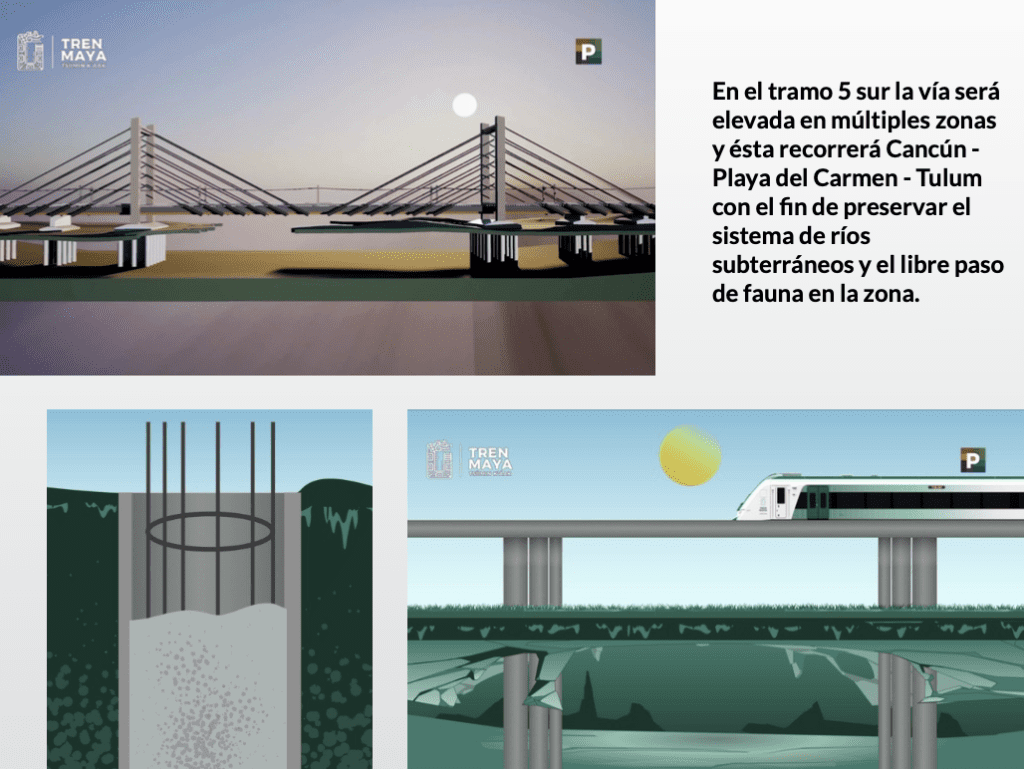
Section 5 South: Playa del Carmen – Tulum
Stations:
• Tulum airport, Quintana Roo.
Stops:
• Xcaret.
• Puerto Aventuras.
• Akumal.
Section 6: Tulum – Chetumal
Stations:
• Aeropuerto Tulum
• Felipe Carrillo Puerto
• Bacalar.
• Chetumal.
Stop:
• Limones, Othón P. Blanco.
Section 7: Chetumal – Escárcega
Stations:
• Xpujil, Campeche.
Stops:
• Nicolas bravo, Campeche.
• Calakmul
• Centenario.
The Tren Maya will have fares for local passengers, fares for national tourists, and fares for foreign tourists, calculated in relation to the service that will be provided.
The train service will begin every day at 6 in the morning, ending in the afternoon between 6 and 9 at night, except for the Cancun – Tulum service, whose schedule will be extended until 11 at night.
The inauguration is scheduled for December 2023.